
When reading the specifications of an electronic vaping device, you may notice battery ratings such as 650mAh, 1500mAh, 2000mAh or 2700mAh.
But what does mAh actually mean, and does a higher number always indicate longer battery life?
Battery capacity is an important technical specification, but it is often misunderstood. A battery's mAh rating describes its nominal electrical charge capacity, not its guaranteed operating time.
Actual performance depends on power consumption, battery voltage, temperature, battery ageing and electronic efficiency.
In this guide, we'll explain the meaning of mAh, how battery capacity relates to runtime, and what Australian consumers should understand about lithium-ion battery safety.
1. What Does mAh Mean in a Vape Battery?
mAh stands for milliampere-hour.
It is a unit used to describe the amount of electrical charge a battery can deliver under specified conditions.
For example, a 2000mAh battery has a nominal capacity of 2000 milliampere-hours, equivalent to 2 ampere-hours (Ah).
In a simplified theoretical example, that amount of charge could correspond to:
200 milliamperes for 10 hours.
500 milliamperes for 4 hours.
1000 milliamperes for 2 hours.
These examples assume ideal conditions and constant current.
Real lithium-ion battery performance varies with discharge rate, temperature, voltage limits and battery condition.
Therefore, the mAh rating should not be interpreted as a precise prediction of runtime.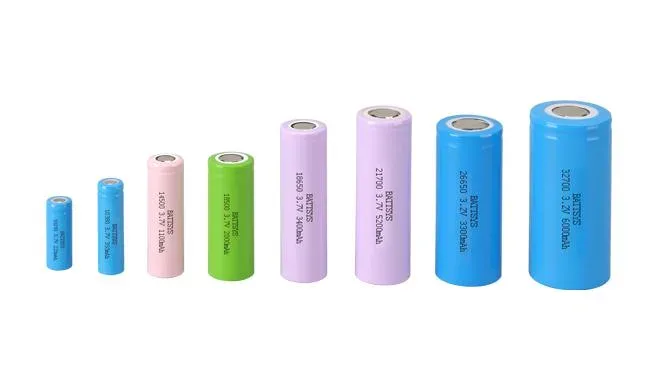
2. Does a Higher mAh Battery Last Longer?
Generally, a battery with a higher mAh rating can store more electrical charge than a lower-capacity battery of similar chemistry and nominal voltage.
However, this does not automatically mean that the device using it will operate longer.
Consider two hypothetical electronic devices:
| Specification | Device A | Device B |
|---|---|---|
| Battery capacity | 1500mAh | 2700mAh |
| Nominal voltage | 3.7V | 3.7V |
| Nominal stored energy | 5.55Wh | 9.99Wh |
| Electrical power consumption | 5W | 15W |
| Idealised operating time | 1.11 hours | 0.67 hours |
These calculations assume constant power consumption and full access to the battery's nominal stored energy.
They are illustrative, not measured results for any specific vaping device.
Although Device B has a larger battery, it consumes power three times as quickly.
As a result, its idealised operating time is shorter.
Battery capacity and power consumption must be considered together when evaluating runtime.
3. What Is the Difference Between mAh and Wh?
Two common battery measurements are milliampere-hours (mAh) and watt-hours (Wh).
They describe different electrical quantities.
mAh measures electrical charge capacity.
Wh measures electrical energy.
Watt-hours are particularly useful when comparing batteries that operate at different nominal voltages.
The relationship is:
Wh = (mAh × Nominal Voltage) ÷ 1000
For example, a 2000mAh battery with a nominal voltage of 3.7V has an estimated nominal energy of:
(2000 × 3.7) ÷ 1000 = 7.4Wh
A 2700mAh battery at the same nominal voltage has:
(2700 × 3.7) ÷ 1000 = 9.99Wh
These figures represent nominal energy estimates rather than the exact amount of energy available during operation.
4. Common Vape Battery Capacities Explained
Electronic vaping devices may use batteries with different nominal capacities.
The following table illustrates how mAh and nominal energy relate when the batteries have the same nominal voltage of 3.7V.
| Battery capacity | Equivalent Ah | Nominal energy |
|---|---|---|
| 650mAh | 0.65Ah | 2.41Wh |
| 1000mAh | 1.00Ah | 3.70Wh |
| 1500mAh | 1.50Ah | 5.55Wh |
| 2000mAh | 2.00Ah | 7.40Wh |
| 2700mAh | 2.70Ah | 9.99Wh |
These values are calculated examples.
They do not establish the operating time, safety or quality of any particular product.
Battery performance also depends on the device's electrical design and operating conditions.
5. Why Does a Vape Battery Drain Faster Than Expected?
Several factors can explain why a battery does not last as long as its nominal capacity might suggest.
Electrical Power Consumption
A device that draws more electrical power will generally consume stored energy more quickly.
Heating elements, displays and control circuitry all contribute to overall energy consumption.
Battery Ageing
Lithium-ion batteries gradually lose usable capacity through chemical ageing.
Repeated charging, temperature exposure and long-term storage can influence the rate of deterioration.
Temperature
Cold conditions can temporarily increase internal resistance and reduce available performance.
Excessive heat can accelerate deterioration and increase battery safety risks.
Electronic Efficiency
Some electrical energy is lost through internal resistance and power conversion.
Different electronic designs may therefore produce different runtimes even when using batteries with similar nominal capacities.
Battery Monitoring Accuracy
Battery indicators often estimate remaining charge rather than directly measuring stored energy.
This can cause displayed percentages to change unevenly during operation.
6. Does Battery Capacity Determine Vape Puff Count?
No.
Battery capacity and advertised puff count describe different aspects of a vaping device.
The mAh rating represents nominal electrical charge capacity.
A puff-count claim represents an estimated number of activations under particular assumptions or testing conditions.
Actual puff count may be influenced by:
Activation duration.
Heating power.
E-liquid capacity.
Coil characteristics.
Battery condition.
Electronic control settings.
A larger battery does not guarantee a higher puff count.
Likewise, two devices with similar battery capacities may have different advertised puff ratings.
Without comparable testing methods, puff-count claims should not be treated as precise measurements of battery endurance.
7. How Does Temperature Affect Lithium-Ion Batteries?
Lithium-ion batteries operate through electrochemical reactions.
Temperature influences the speed of these reactions and the battery's internal resistance.
In cold conditions, a battery may experience greater voltage drop when supplying current.
This can reduce its apparent available capacity or cause an electronic device to shut down earlier than expected.
In hot conditions, prolonged exposure can accelerate battery deterioration and increase the risk of failure.
For Australian consumers, particular care is needed during summer.
Vehicles and enclosed spaces exposed to sunlight can reach temperatures that are unsafe for battery-powered devices.
A battery that becomes swollen, unusually hot, damaged or unstable should not be used.
8. Does a Higher mAh Battery Take Longer to Charge?
Charging time depends on more than battery capacity.
Important factors include:
Charging current.
Battery capacity.
Battery condition.
Charging circuitry.
Temperature.
The charging profile used by the device.
For example, a larger battery may require more time to charge when the charging current remains unchanged.
However, a higher-capacity battery may charge in a similar amount of time if its charging system supports a suitably higher current.
Lithium-ion charging is not normally performed at a constant current throughout the entire process.
Charging current generally decreases during the later stages.
Therefore, dividing battery capacity by charging current provides only a rough estimate.
Consumers should not attempt to modify charging circuits or use unsupported charging methods.
9. Vape Battery Safety in Australia
Many vaping devices contain lithium-based batteries.
These batteries can create fire risks if damaged, crushed, overheated or improperly charged.
Important safety precautions include:
Avoid leaving devices inside hot vehicles.
Keep batteries away from excessive heat.
Do not puncture, crush or dismantle sealed devices.
Never charge a device that is not designed to be rechargeable.
Follow manufacturer charging instructions.
Stop using devices that become unusually hot or show signs of damage.
Do not attempt to repair internal battery components.
At the end of its usable life, a battery-powered vaping device should not be placed in ordinary household rubbish or kerbside recycling.
Contact your local council or an authorised e-waste collection service for suitable disposal arrangements.
Not all battery collection points accept complete vaping devices with embedded batteries.