
Have you noticed that your IGET ONE 12000 battery seems to drain faster than expected? Perhaps the battery indicator drops quickly, the device runs out of power sooner than anticipated, or its performance changes between Regular and Turbo modes.
These issues can raise questions about battery capacity, power consumption and the condition of the device.
The IGET ONE 12000 is commonly advertised with a 2700mAh battery and two operating modes: Regular and Turbo. However, a battery's stated capacity does not guarantee a particular runtime.
In this guide, we'll explore the technical reasons why an IGET ONE 12000 battery may drain quickly, how operating modes can affect energy consumption, and what Australian consumers should know about lithium battery safety.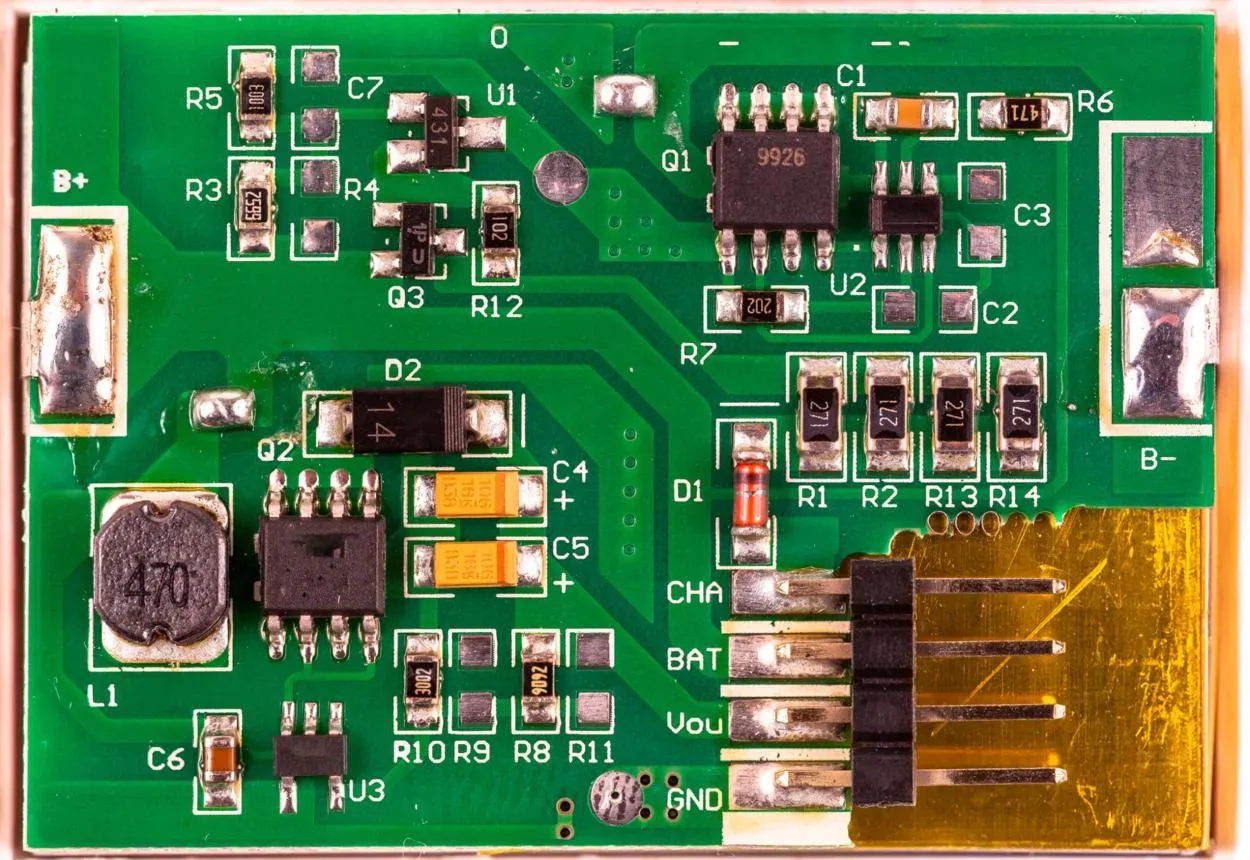
1. Understanding the IGET ONE 12000 Battery Capacity
The IGET ONE 12000 is commonly listed with a 2700mAh battery, although specifications should be confirmed against reliable documentation for the exact product version.
The abbreviation mAh stands for milliampere-hour. It measures the nominal electrical charge capacity of a battery.
A 2700mAh rating represents 2.7 ampere-hours of nominal charge capacity.
However, this does not mean the battery will operate for a fixed number of hours or produce exactly 12,000 puffs.
Actual battery runtime depends on:
The electrical power consumed by the heating system.
Activation frequency and duration.
The selected operating mode.
Battery temperature and condition.
The efficiency of the device's electronic circuitry.
A battery capacity figure is useful for understanding specifications, but it cannot independently predict real-world performance.
2. Does Turbo Mode Drain the Battery Faster?
One possible reason for faster battery drain is the difference between Regular and Turbo operating modes.
The IGET ONE 12000 is advertised with two operating modes. These modes are intended to provide different operating characteristics.
If Turbo mode operates the heating element at a higher electrical power than Regular mode, it will generally consume more energy for the same activation duration.
For example, a hypothetical heating system operating at 20 watts uses twice as much energy per second as one operating at 10 watts.
This does not establish the actual power settings of the IGET ONE 12000, which would require reliable manufacturer specifications or testing.
The general principle is that higher power consumption can reduce battery runtime, even when the battery capacity remains unchanged.
The actual difference between modes depends on the device's internal power control and activation behaviour.
3. Frequent or Longer Activations Increase Energy Consumption
Battery discharge also depends on how frequently and how long the heating system is activated.
Every activation draws electrical energy from the battery.
Longer activations require energy over a longer period, while frequent activations increase total consumption.
Two devices with identical battery capacities can therefore show different discharge patterns depending on their operating conditions.
This is why battery life cannot be accurately predicted using the advertised puff count alone.
4. Battery Ageing Can Reduce Available Capacity
Lithium-ion batteries gradually lose usable capacity over time.
Battery ageing occurs through chemical changes within the cell and may be influenced by charging history, temperature and storage conditions.
As a battery ages, its internal resistance may increase and its available capacity may decrease.
Possible signs include:
Shorter operating time than previously observed.
Faster apparent battery-level decreases.
Unexpected shutdowns.
Inconsistent battery indicator readings.
These symptoms may also result from electronic faults, so they should not be considered definitive proof of battery ageing.
Sealed vaping devices should not be opened to inspect or replace their internal batteries.
5. Australian Weather Conditions Can Affect Battery Performance
Australia's climate can create challenging conditions for lithium-powered electronic devices.
During summer, vehicles and enclosed spaces exposed to direct sunlight can become extremely hot.
Prolonged exposure to excessive heat can accelerate battery deterioration and increase the risk of failure.
Cold conditions may temporarily reduce battery performance by increasing internal resistance and causing greater voltage drop under load.
Battery temperature therefore affects both performance and safety.
Avoid leaving battery-powered devices inside hot cars, near heating equipment or in direct sunlight.
If a device becomes unusually hot, swells or shows other signs of damage, discontinue use.
6. Why Does the IGET ONE Battery Indicator Drop Quickly?
A battery indicator may not always represent the precise amount of usable energy remaining.
Depending on the electronic design, a device may estimate battery charge using voltage measurements or other monitoring methods.
Battery voltage changes during electrical loading and may recover somewhat when the load is removed.
This can cause an estimated battery level to behave differently from a perfectly linear percentage display.
For example, the displayed charge may appear to fall rapidly during operation without demonstrating an equivalent permanent loss of battery capacity.
However, repeated unexpected shutdowns or highly inconsistent readings may indicate an underlying fault.
7. Does the 12000 Puff Rating Represent Battery Life?
No.
The advertised 12,000 puff figure is separate from the battery's nominal capacity.
Product listings may also describe different puff-count estimates for Regular and Turbo modes.
These estimates depend on the testing assumptions used and should not be interpreted as guaranteed real-world results.
Actual device operation is affected by battery energy, heating power, activation duration, available e-liquid and component condition.
A device may still contain e-liquid when its battery becomes depleted, or it may stop producing aerosol for reasons unrelated to the battery.
Therefore, advertised puff count and battery capacity should be evaluated separately.
8. How to Recognise Potential IGET ONE Battery Problems
The following table outlines common observations and possible explanations.
| Observation | Possible explanation | Safety consideration |
|---|---|---|
| Battery drains faster in Turbo mode | Potentially higher power consumption | Actual difference depends on device settings |
| Battery indicator drops suddenly | Voltage changes or estimation error | Do not rely on the indicator alone |
| Runtime decreases over time | Battery ageing or deterioration | Watch for abnormal heat or damage |
| Device shuts down unexpectedly | Low voltage or electronic fault | Avoid attempting internal repairs |
| Device becomes unusually hot | Possible overheating or electrical fault | Stop using the device |
| Battery swells or makes hissing sounds | Potential battery failure | Keep clear and seek appropriate assistance |
These observations are not sufficient to establish a definitive diagnosis.
If the device shows abnormal electrical behaviour, it should not be dismantled or modified.
9. IGET ONE Battery Safety and Disposal in Australia
Lithium-based batteries can create fire hazards if they are damaged, crushed, overheated or improperly charged.
Australian consumers should follow important safety precautions:
Do not leave devices inside hot vehicles.
Avoid excessive heat and direct sunlight.
Never puncture, crush or dismantle sealed batteries.
Do not use devices with swollen or damaged batteries.
Only charge rechargeable devices according to the manufacturer's instructions.
Stop using a device that becomes unusually hot or behaves abnormally.
Do not attempt to repair damaged internal electrical components.
At the end of its usable life, a battery-powered vaping device should not be placed in household rubbish or ordinary kerbside recycling.
Contact your local council or an authorised e-waste collection provider for guidance.
Not every general battery collection point accepts complete vaping devices with embedded batteries.