
Why Does My Vape Show “No Atomiser”?
Summary: A “No Atomiser” message usually means your vape cannot detect the heating coil or read its resistance correctly. Possible causes include a poorly seated pod, dirty contacts, an incorrectly installed coil or a hardware fault. The message does not automatically mean the battery is flat or the e-liquid has run out.
What Does “No Atomiser” Mean?
An atomiser is the part of a vape that contains the heating element used to turn e-liquid into an aerosol.
When a device displays “No Atomiser”, it generally cannot recognise a valid electrical connection to that heating element. Some screens use the American spelling, “No Atomizer”, or a related message such as “Check Atomizer”.
The exact meaning varies by model, so the device’s instruction manual should be your first reference. Innokin explains that these warnings can appear when a device cannot read the installed coil’s resistance or the reading falls outside its expected range. 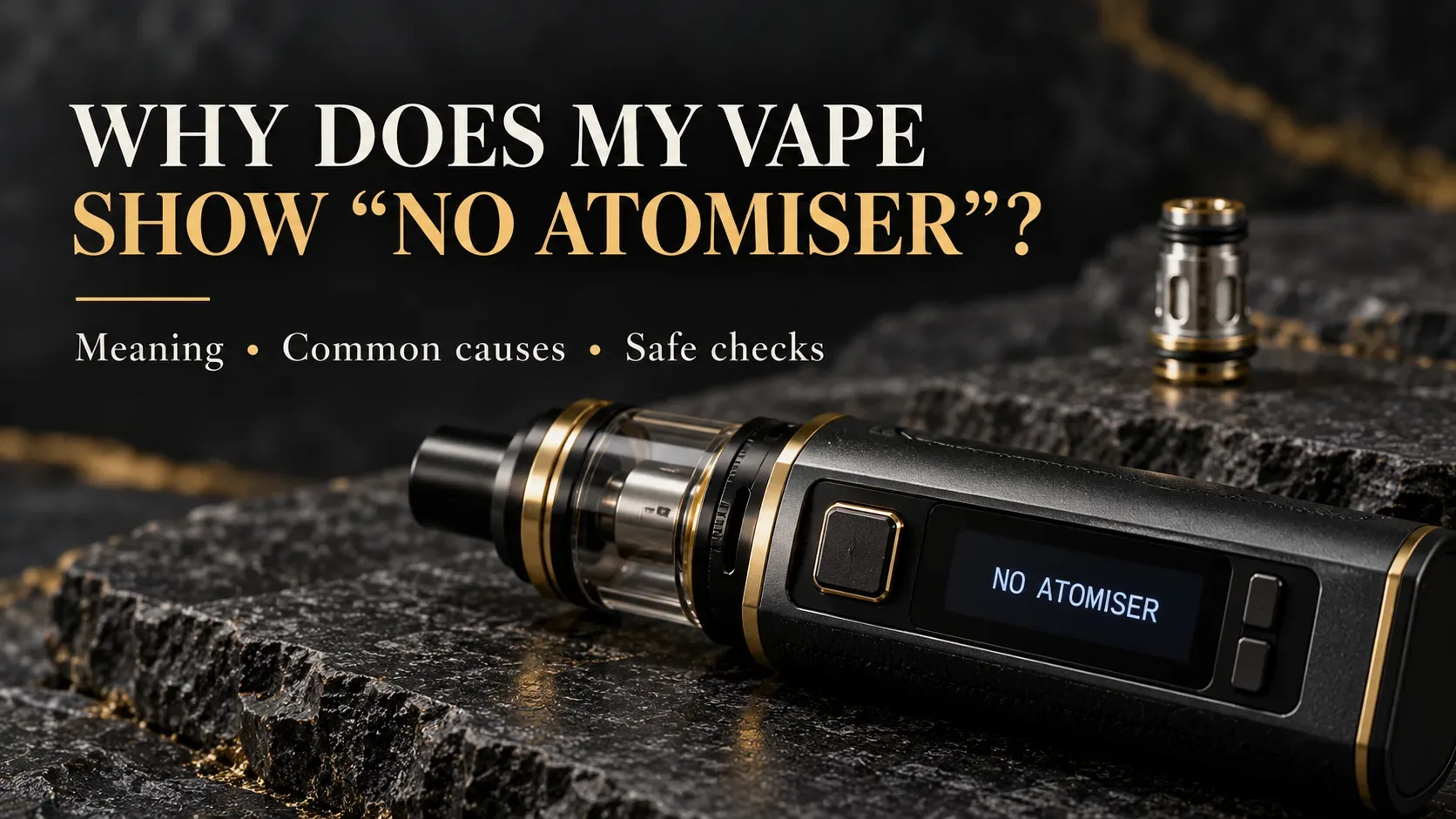
Common Reasons for a “No Atomiser” Message
1. The Pod or Tank Is Not Seated Correctly
A pod or tank may appear attached without making a reliable electrical connection. Misalignment or an incorrectly fitted component can prevent coil detection.
2. The Electrical Contacts Are Dirty or Wet
Dust, condensation and leaked e-liquid can contaminate the connection points. Manufacturer support guidance recommends keeping these areas clean and dry.
3. The Coil Is Incorrectly Installed or Faulty
In devices with replaceable coils, an improperly fitted or damaged coil can interrupt the electrical connection. A newly installed coil can also be defective; being new does not rule out a component fault.
4. The Components Are Incompatible
A pod or coil that physically fits is not necessarily electrically compatible. Supported coil types and resistance ranges depend on the device.
5. The Device Has a Connection or Internal Fault
Damage to a connector, wiring or control circuit may also prevent detection. A persistent warning needs professional support rather than repeated attempts to activate the device.
Safe Checks Before Seeking Support
These checks apply only to components the manufacturer identifies as user-removable.
- Switch the device off and disconnect it from charging. Allow it to cool before inspection.
- Read the model’s error-message guidance. Similar messages can have different meanings.
- Inspect accessible connections. Look for visible liquid, dirt or physical damage.
- Gently dry accessible contacts, using a dry, lint-free cloth or swab where the manual permits. Do not pour cleaning liquid into the device.
- Check component compatibility and seating. Follow the manufacturer’s installation instructions without forcing or overtightening parts.
Innokin’s support guidance specifically recommends dry-cleaning the device’s connector to remove foreign material and e-liquid. If the warning persists after the permitted checks, contact the manufacturer or an appropriate service provider.
Do not pry up connector pins, bridge contacts with metal, bypass protection features or dismantle a sealed device. If liquid may have entered the electronics, stop using and charging it pending assessment.
“No Atomiser” vs Other Vape Error Messages
These warnings are related, but they are not interchangeable.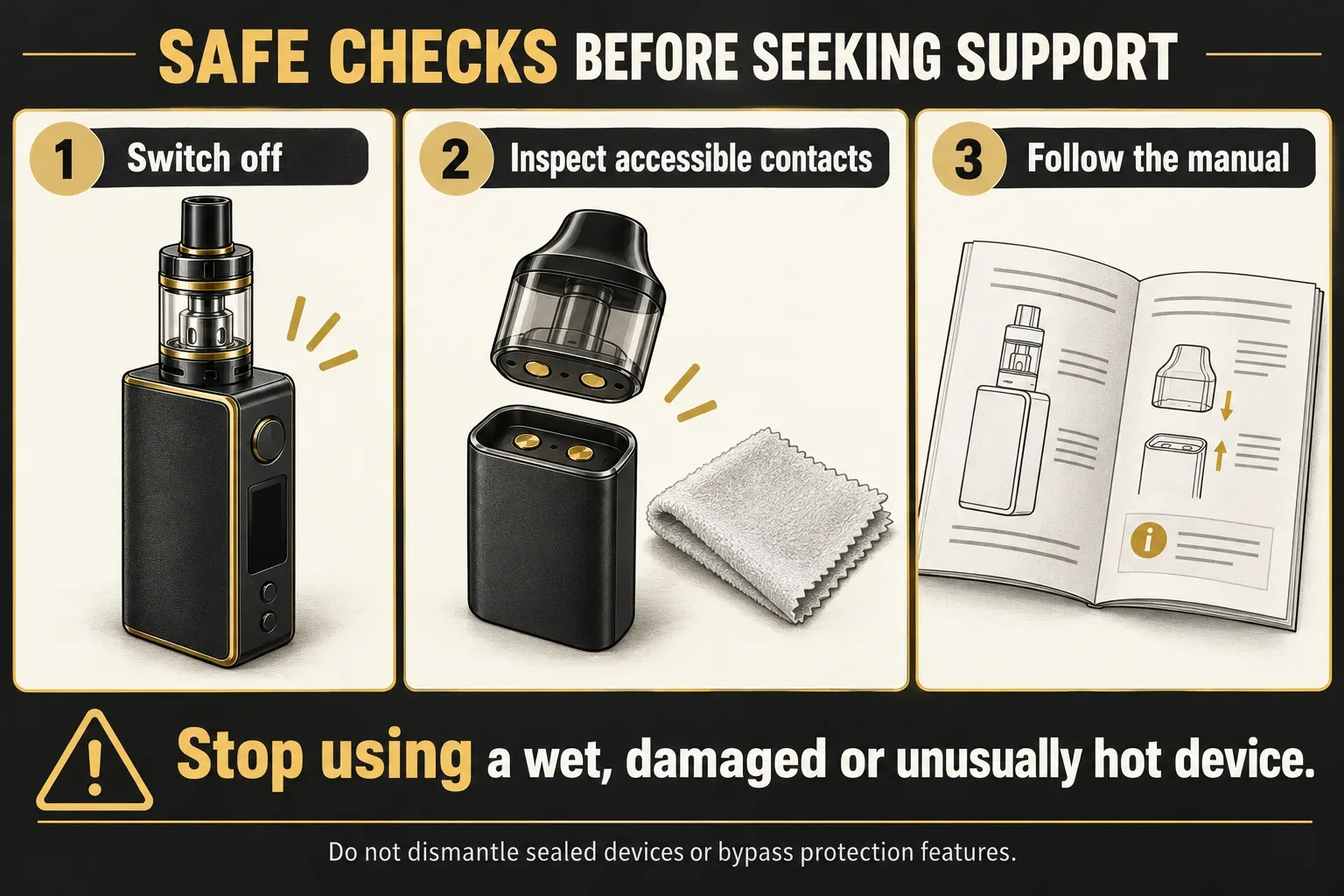
| Screen message | General meaning |
|---|---|
| No Atomiser / No Atomizer | The device cannot detect a valid coil connection or resistance reading |
| Check Coil / Check Atomizer | A connection or resistance issue requires checking against the manual |
| Atomizer Short / Coil Short | The device has detected a possible short circuit |
| Low Res / Ohms Too Low | Detected resistance is below the supported limit |
| Low Battery / Low Volt | Battery voltage is insufficient for normal operation |
Wording and thresholds vary between devices. A short-circuit warning should never be treated as a prompt to increase power or bypass the protection system.
When Should You Stop Troubleshooting?
Stop using the device and seek support if:
- The warning returns after basic checks.
- The connector or casing is visibly damaged.
- Liquid appears to have entered the electronics.
- The device becomes unusually hot or activates by itself.
- The battery is swollen, leaking or otherwise damaged.
Do not continue pressing the firing button to force the device to work. A warning clearing temporarily does not establish that a damaged device is safe.