
Two IGET Boxes, Two Different Designs — Does Something Look Wrong?
Imagine comparing two IGET product boxes.
Both display the IGET name, but their colours, printed information or authentication labels look different.
One package may have a familiar QR code, while another features an orange security image.
Does that mean one of the products is counterfeit?
Not necessarily.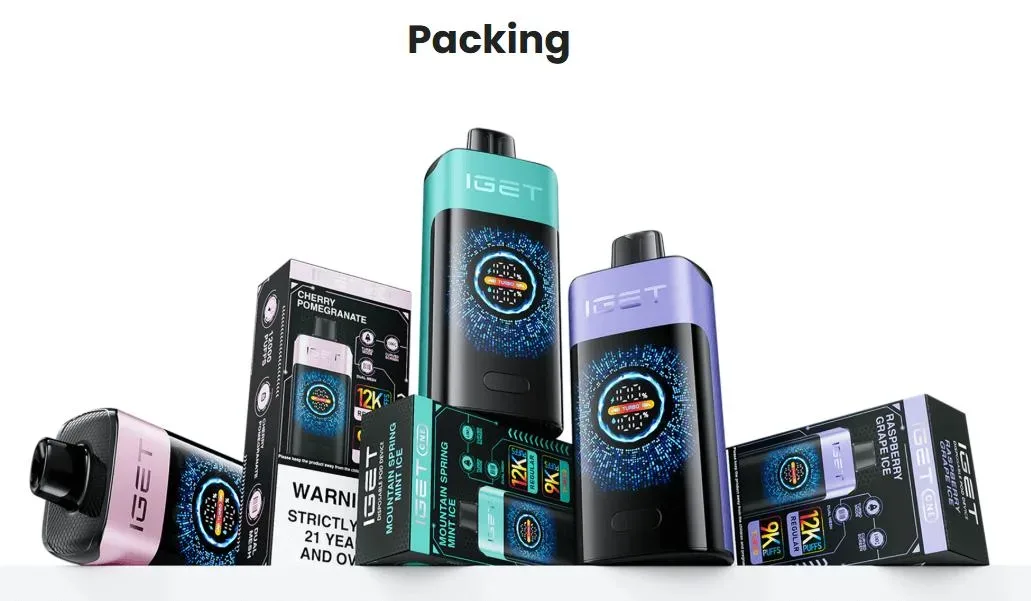
Packaging differences can occur for several reasons, including product-series differences, revisions to packaging artwork, changes to authentication systems and different information required for particular products or markets.
In fact, IGET's official product verification system recognises more than one packaging authentication format.
However, there is an equally important distinction: a plausible explanation for a packaging difference is not proof that an individual product is authentic.
This guide examines what packaging differences can mean, what IGET has officially confirmed and how Australian readers should interpret product labels and regulatory information.
1. IGET Has More Than One Packaging Authentication Format
One of the clearest documented reasons for packaging differences is the evolution of IGET's anti-counterfeiting system.
IGET's official verification page identifies two packaging authentication methods.
The newer method uses an orange anti-counterfeiting image, which can be photographed for verification.
The older method uses a QR-based security code.
In an official announcement dated 1 April 2025, IGET explained its dual authentication approach and described both verification methods.
This is significant because the brand itself acknowledges that different security-code formats have existed in the market.
Therefore, finding different authentication designs does not automatically establish that one product is counterfeit.
At the same time, counterfeit packaging may imitate either format.
An actual verification result and reliable supporting information are still necessary.
2. Different IGET Models Can Have Different Packaging
Another explanation is that two products may belong to different IGET series.
For example, IGET ONE 12000 and IGET BAR PRO 10000 are not identical models.
They have different published specifications, physical designs and product identifiers.
Their packaging should therefore be assessed in relation to the precise model being represented.
| Product Information | IGET ONE 12000 | IGET BAR PRO 10000 |
|---|---|---|
| Model Name | ONE 12000 | BAR PRO 10000 |
| Advertised Puff Count | Up to 12,000 in Regular Mode | Up to 10,000 |
| Published Battery Capacity | 2700mAh | 2000mAh |
| Published Coil | 0.6Ω Dual Mesh | 1.2Ω Mesh |
| General Exterior | Gold-and-black design with digital display | Compact design with graphic front panel |
A different series name, illustrated device or technical specification may simply reflect a different product.
It should not be treated as a packaging defect without first confirming which model is being compared.
The key question is whether the packaging information corresponds to the product actually identified.
3. Why Packaging Artwork May Change Over Time
Manufacturers sometimes revise packaging during a product's commercial life.
Potential changes include typography, layout, safety information, authentication features and product identification details.
However, not every packaging difference should automatically be attributed to an official redesign.
A website may use an outdated photograph.
A retailer may display a generic image representing a product family.
A different package may belong to a different product generation.
Or the packaging could be inaccurate or counterfeit.
Without an official model-specific packaging history, it is not possible to determine which explanation applies to a particular box.
That is why packaging differences require evidence rather than assumptions.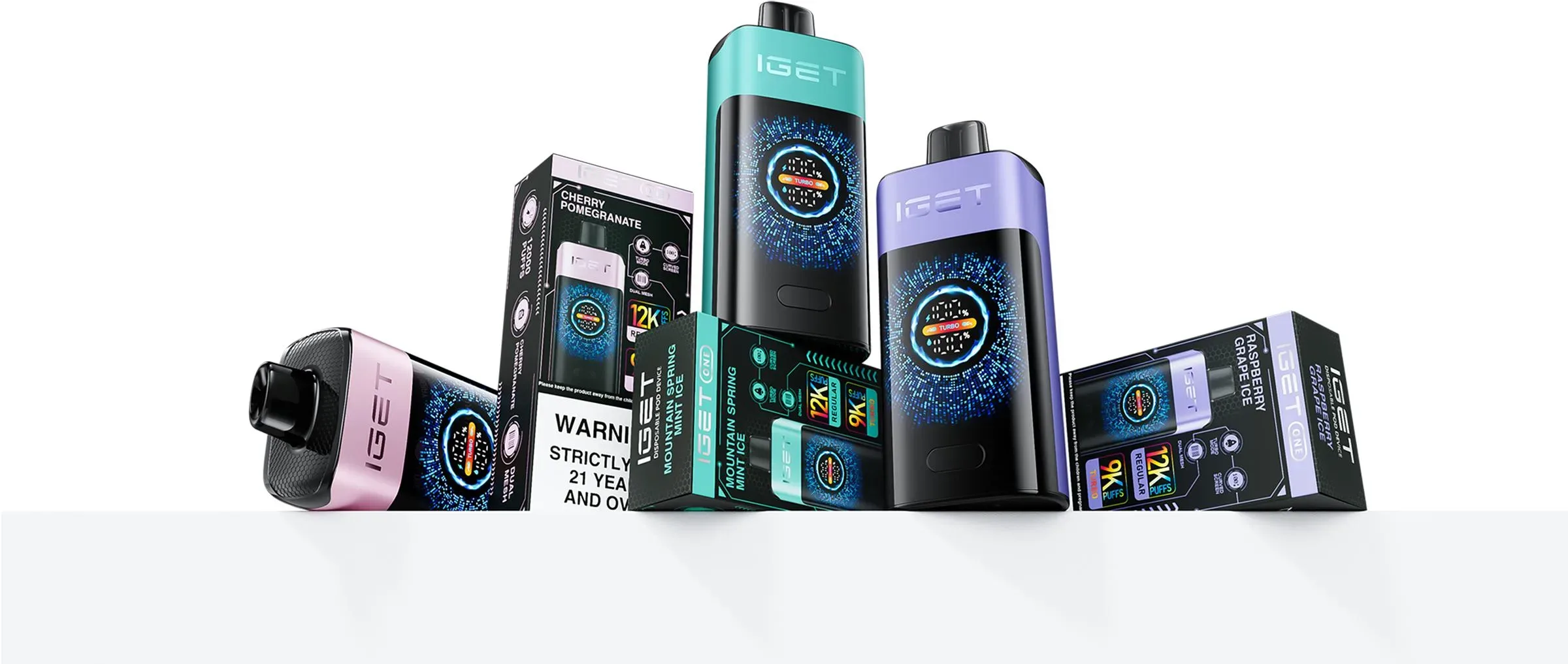
4. Understanding IGET's Orange Code and QR Code Systems
IGET's official authentication guidance identifies two approaches.
Newer Orange-Code Verification
The orange image-based code is used with the official photo verification process.
According to IGET, the code is located on the bottom of relevant product packaging.
The consumer accesses the official verification page and uses the available image verification function.
Older QR-Code Verification
IGET also documents a QR-based process.
Its official guidance describes scanning the security code or entering the relevant anti-counterfeiting number through the official verification system.
The critical detail is the website used to verify the code.
IGET identifies its official verification service at:
A security image or QR code printed on a box should not automatically be trusted simply because it looks professional.
Fraudulent packaging can also contain QR codes.
Users should check that verification takes place on the legitimate manufacturer domain rather than an unrelated website.
5. Does a Successful QR Scan Prove a Product Is Genuine?
Not by itself.
A QR code is fundamentally a machine-readable way of storing information, often including a website address or other data.
Scanning a code does not independently establish the origin of the physical item carrying it.
For example, a fraudulent package may include a copied code or a QR image directing users to a misleading website.
Even where an official verification system recognises a code, the surrounding circumstances can matter.
IGET's verification materials also describe repeated-query warnings intended to identify suspicious use of security information.
If a verification result produces a warning, the appropriate next step is to consult the brand through its published official contact channels.
Verification should be understood as an evidence-based process, not as a conclusion drawn from the appearance of a sticker.
6. Could Different Manufacturer Names Explain Packaging Differences?
Packaging may identify different companies involved in a product's supply chain.
However, company names need to be interpreted carefully.
The manufacturer, brand owner, distributor and importer are not necessarily the same business.
A company named on a package may have a particular legal or commercial responsibility without operating the factory that made the device.
For example, the word LTD in a company name usually refers to a limited company.
It does not independently identify a manufacturer or prove that a device was produced by a different factory.
When examining packaging, compare the full legal company names, stated roles and any reliable manufacturer information.
Do not assume that different website addresses or corporate abbreviations automatically indicate separate manufacturers.
7. Packaging Colour Differences Are Not Enough to Identify a Counterfeit
Colour is one of the first things people notice.
A familiar IGET product might appear online with a different colour scheme, graphic layout or label position.
However, colours alone do not establish authenticity.
There are several possible explanations.
The image may depict a different flavour variant.
It may represent a different series or packaging generation.
The photograph may have been edited or rendered digitally.
The packaging may have been revised.
Or the listing may be inaccurate.
A product that looks familiar can still be counterfeit, while a legitimate packaging revision may look unfamiliar.
For this reason, appearance should be considered alongside official verification and product documentation.
8. Five Questions That Help Explain Packaging Differences
Instead of immediately asking whether a different box is fake, it can be more useful to ask five specific questions.
Question 1: Are the two boxes for the exact same model?
Check the full model name rather than the brand alone.
Question 2: Are the published specifications consistent?
Compare model identifiers and technical information with reliable manufacturer documentation.
Question 3: Do the packages use different official authentication formats?
IGET has documented both orange image codes and QR-based verification.
Question 4: Can the company information be verified?
A business name or website printed on a package should be checked against a reliable source.
Question 5: Is there evidence confirming the specific packaging version?
A historical manufacturer image, formal announcement or official verification response may help establish whether a particular packaging design is recognised.
If these questions remain unanswered, the packaging difference should be described as unresolved rather than declared genuine or counterfeit.
9. Packaging Differences vs Possible Counterfeit Indicators
Some observations warrant further investigation, but no single feature necessarily provides a definitive answer.
| Observation | Possible Explanation | Appropriate Interpretation |
|---|---|---|
| Different printed colours | Model, design or packaging variation | Not proof of counterfeit |
| Orange security image | IGET's documented image-verification format | Verify through official system |
| QR security code | IGET's documented QR-based format | Check official destination |
| Different company name | Different stated supply-chain role | Verify legal identity |
| Different product specifications | Different model or inaccurate listing | Compare exact model |
| Incorrect manufacturer website | Misprint, outdated detail or suspicious packaging | Seek independent confirmation |
| Repeated-code warning | Potential copied or reused security information | Contact manufacturer |
| Missing or inconsistent identifiers | Incomplete or potentially suspicious information | Investigate further |
The most reliable conclusion is one supported by several independent pieces of evidence.
10. Why Australia Has Different Vape Packaging Requirements
Australia's therapeutic vaping framework introduces an additional issue.
Australian regulatory requirements are not the same as general overseas commercial packaging practices.
Under the applicable Therapeutic Goods Administration standards, permitted therapeutic vaping goods are subject to specific packaging, labelling and appearance restrictions.
These include requirements intended to reduce promotional appeal and communicate important product information.
Among other requirements, relevant labels and packaging must generally use a restrained, predominantly white presentation.
Promotional imagery and certain decorative features are prohibited.
The detailed requirements depend on the type of vaping goods and the applicable standard.
Consequently, a colourful IGET product box appearing in an overseas catalogue should not be assumed to meet Australia's therapeutic vaping requirements.
11. Does Australian-Compliant Packaging Make an IGET Product Legal?
No.
Packaging is only one part of regulatory compliance.
A product must also satisfy applicable requirements relating to its type, components, ingredients and lawful supply arrangements.
Australia prohibits the commercial supply of single-use disposable vaping devices.
Permitted therapeutic vaping products must be supplied through the authorised regulatory framework.
A product does not become lawful merely because its box contains English text, a warning label, an Australian address or a familiar brand name.
Similarly, authentication as a genuine overseas product does not establish eligibility for Australian supply.
Authenticity and Australian regulatory compliance are separate questions.
12. How to Interpret Packaging Information More Reliably
When researching IGET packaging, the most useful approach is to compare information systematically.
Begin with the exact model designation.
Then examine the manufacturer-published specifications, authentication method, responsible company information and any official notices relevant to that packaging version.
If the evidence is incomplete, do not assume that a visual match settles the question.
It is also important to avoid relying on photographs alone.
Lighting, camera angles, image compression and website editing can make colours or printing appear different.
A legitimate comparison should use reliable product information and properly documented packaging evidence.
13. What Australian Consumers Should Know
For Australian readers, unfamiliar packaging may raise both authenticity and regulatory questions.
These questions should be kept separate.
A package may be authentic but not meet Australia's therapeutic vaping requirements.
A package may also imitate a legitimate design without being genuine.
The presence of an Australian warehouse address, shipping claim or retailer website does not independently establish either authenticity or lawful supply.
Official manufacturer verification and TGA regulatory guidance provide different forms of information, and both have their place in understanding a product.
Conclusion: Different Packaging Does Not Always Mean a Different Product
IGET product packages can look different for several reasons.
The brand has officially documented multiple authentication formats, and its different product series carry different model specifications.
Packaging revisions, retailer photography and product identification differences may also explain some variations, although individual cases require evidence.
The most important point is not to treat packaging colour or layout as definitive proof of authenticity.
Official code verification, accurate model identification and reliable documentation provide a stronger basis for assessment.
For Australian readers, there is one further distinction: genuine overseas packaging does not establish compliance with Australia's therapeutic vaping laws.
Understanding these differences helps turn a confusing packaging comparison into a more reliable product-information assessment.