
Quick Answer: A used disposable vape is a lithium-battery device, not general rubbish — in Australia it should never go in your household bin or kerbside recycling. The responsible routine is simple: let the device fully drain, store it dry and away from anything flammable, then take it to a battery or e-waste drop-off point (look for B-cycle accredited collectors, many councils, and battery bins at major retailers). Every device on this site ships sealed and batch-coded from Australian stock, so nothing arrives half-used or unlabelled — and ordering with intention, rather than accumulating half-finished bars, is the easiest way to cut down on end-of-life waste. Orders ship Australia-wide for a flat A$18, free over A$199, with same-day dispatch on business days before about 2:30pm AEST.
Disposable vapes have become the default format for a lot of Australian adult vapers, and that convenience comes with one awkward question most people postpone: what do you actually do with the bar when it runs out? A single device like the ALIBARBAR INGOT 9000 range or the ALIBARBAR TEQ 12000 range is rated for thousands of puffs, but every one of them eventually reaches its end of life — and what happens at that point matters more than most product pages are willing to talk about. This guide walks through the full disposal picture for Australian adults: why used vapes are classified the way they are, where drop-off points actually exist, how to store finished devices safely in the meantime, and what the rules look like across councils and states. No therapeutic claims, no scare tactics — just the practical routine.
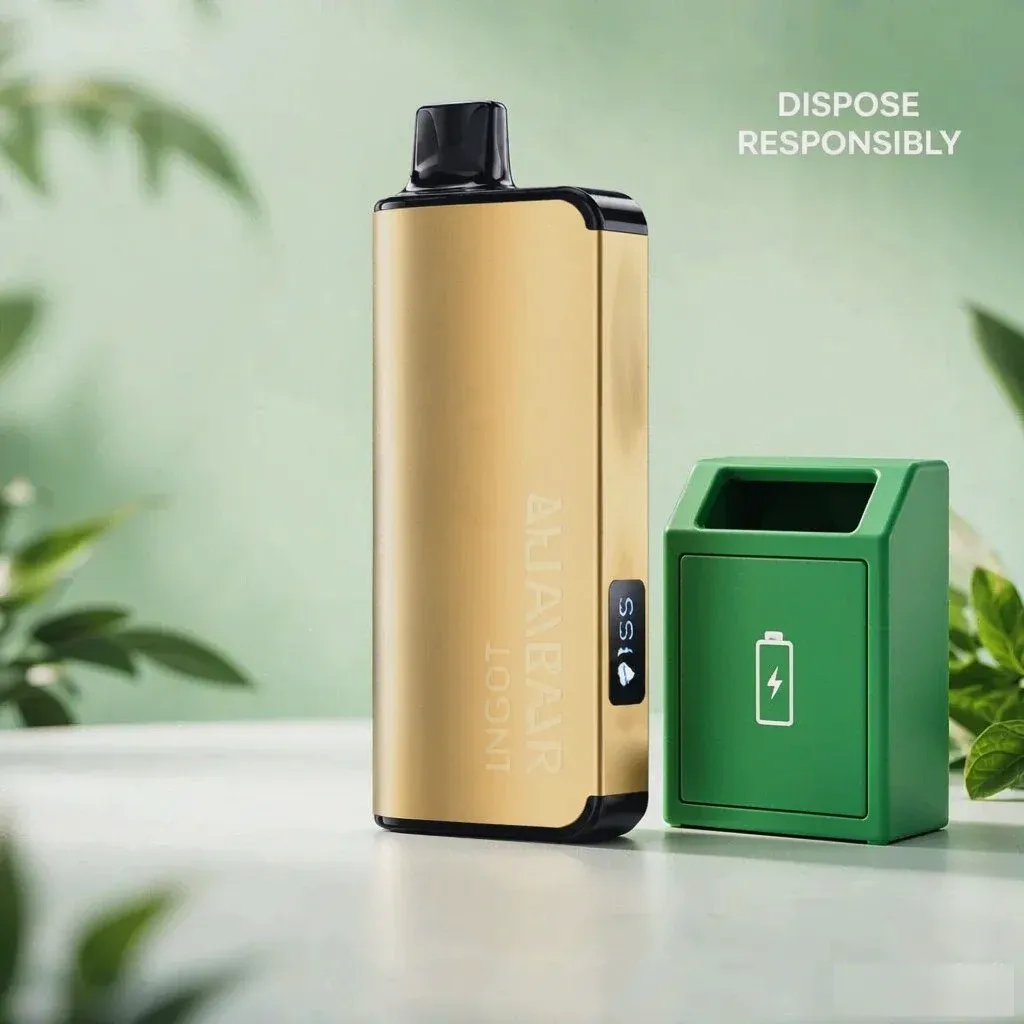
Why a Used Disposable Vape Cannot Go in the Household Bin
The core issue is the battery. Every disposable vape on the market — from a compact IGET Bar Pro to a high-capacity bar — contains a rechargeable lithium cell, along with a small circuit board, a mesh coil, plastic casing, and a wick that may still hold traces of e-liquid. Lithium cells behave very differently from ordinary household waste: if they are crushed, punctured, or exposed to heat inside a garbage truck or a compactor at a sorting facility, they can short-circuit and enter a state called thermal runaway, which produces intense heat and fire that is extremely difficult to extinguish.
Waste operators across Australia have been reporting a steady rise in fires traced back to lithium batteries in kerbside bins, and vapes are one of the fastest-growing contributors. That is the practical reason behind the rule — it is not bureaucracy for its own sake. When a used bar goes into a household bin, it gets compressed within hours of collection, often alongside metal objects that can pierce the casing. A drop-off point, by contrast, handles these devices through channels designed for lithium chemistry: padded collection containers, controlled transport, and facilities that can safely separate the battery from the housing.
There is also a resource argument on top of the safety argument. Lithium, cobalt, nickel and copper inside a used device are all recoverable materials. A bar that ends up in landfill loses those materials permanently, and landfill conditions are exactly the ones that make leaking or ignition more likely. Proper recycling is the only path where both risks and materials are handled well.
What Is Actually Inside a Used Vape
Understanding the components helps explain the disposal rules, so here is the honest anatomy of a finished device. The largest element by weight is the battery — a lithium cell sized to outlast the e-liquid supply, which is why the battery usually still holds some charge even when the flavour is finished. Then there is the control board: a small printed circuit that manages power delivery from draw to draw. The coil is a fine metal mesh wrapped around a wick, saturated with whatever e-liquid remains. The casing is mostly plastic, sometimes with a metal or metalised finish — the gold-coloured finish on the INGOT 9000 bars, for example, is part of the housing rather than a separate material.
Two practical consequences follow from this anatomy. First, because the battery may still hold charge, a "finished" vape is not electrically inert — which is why storage before drop-off matters (more on that below). Second, because residual e-liquid can remain in the wick, the device should be kept upright and dry so nothing seeps out into a drawer or bag. Neither of these is complicated to manage, but both change the answer from "toss it" to "set it aside properly".
The Responsible Disposal Routine, Step by Step
Step 1 — Let the Device Fully Drain
When a bar stops producing vapour — flavour fades, the draw goes weak, or the unit shuts itself off — stop using it and let it sit for a day. This gives any residual charge in the cell time to settle. Do not attempt to "top up" a disposable or open it to extract more life; these devices are not designed to be refilled or recharged, and tampering with the housing is the single most common cause of battery damage in stored vapes. If you want maximum life from a purchase, the honest answer is to buy the puff count that matches your actual usage in the first place — the pacing maths in the 9,000-puff lifespan guide is a good baseline for judging that.
Step 2 — Store It Safely Until Drop-Off
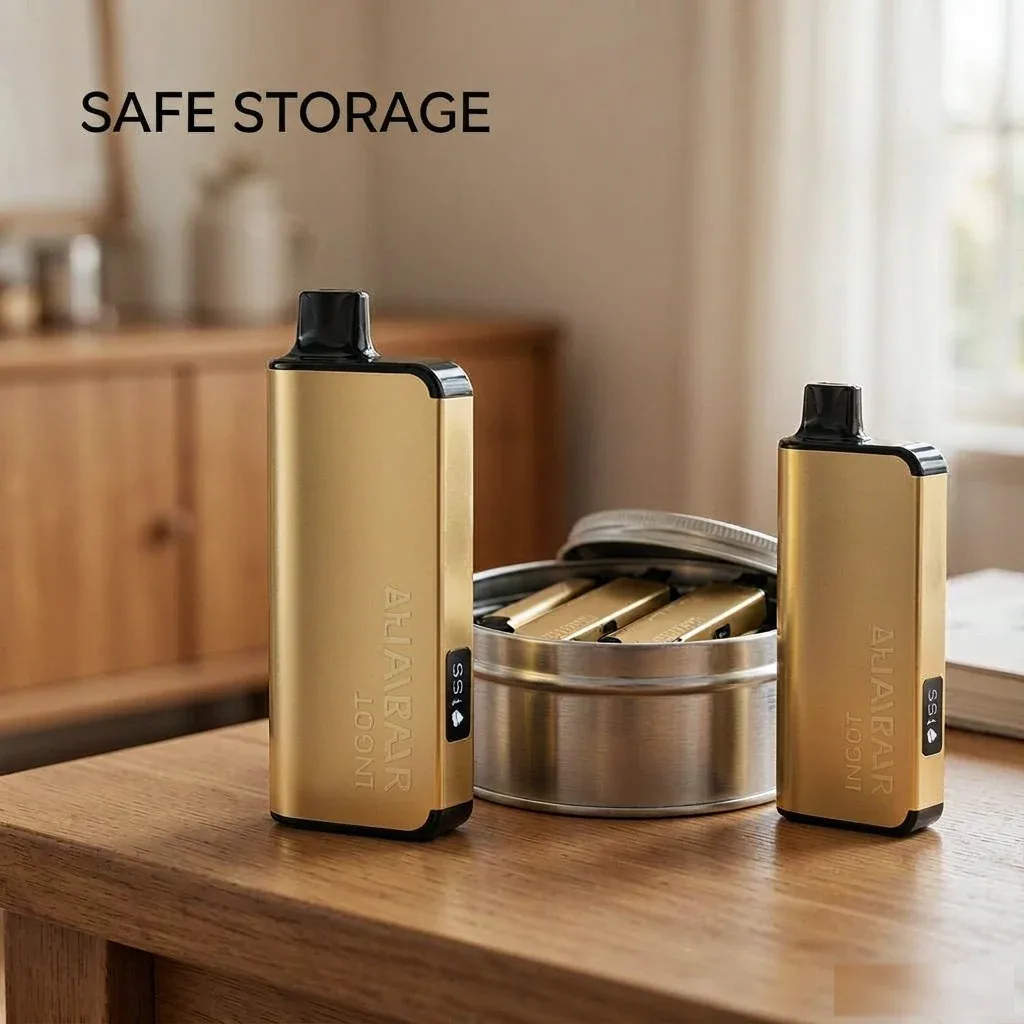
Most people will not drive to a drop-off point the moment a bar finishes, and that is fine — the goal is safe interim storage. Keep used devices in a cool, dry spot away from direct sunlight and away from anything combustible: a metal tin, a ceramic container, or a dedicated drawer all work. Do not leave them loose in a car glovebox in summer (the storage risks in the Australian summer storage guide apply doubly to used devices with partially charged cells), and do not keep them in a pocket or bag where keys and coins can press against the device and damage the housing. Cap the ends if the original packaging is still around, and keep the devices upright so any residue stays in the wick rather than leaking out.
Step 3 — Find a Battery or E-Waste Drop-Off Point
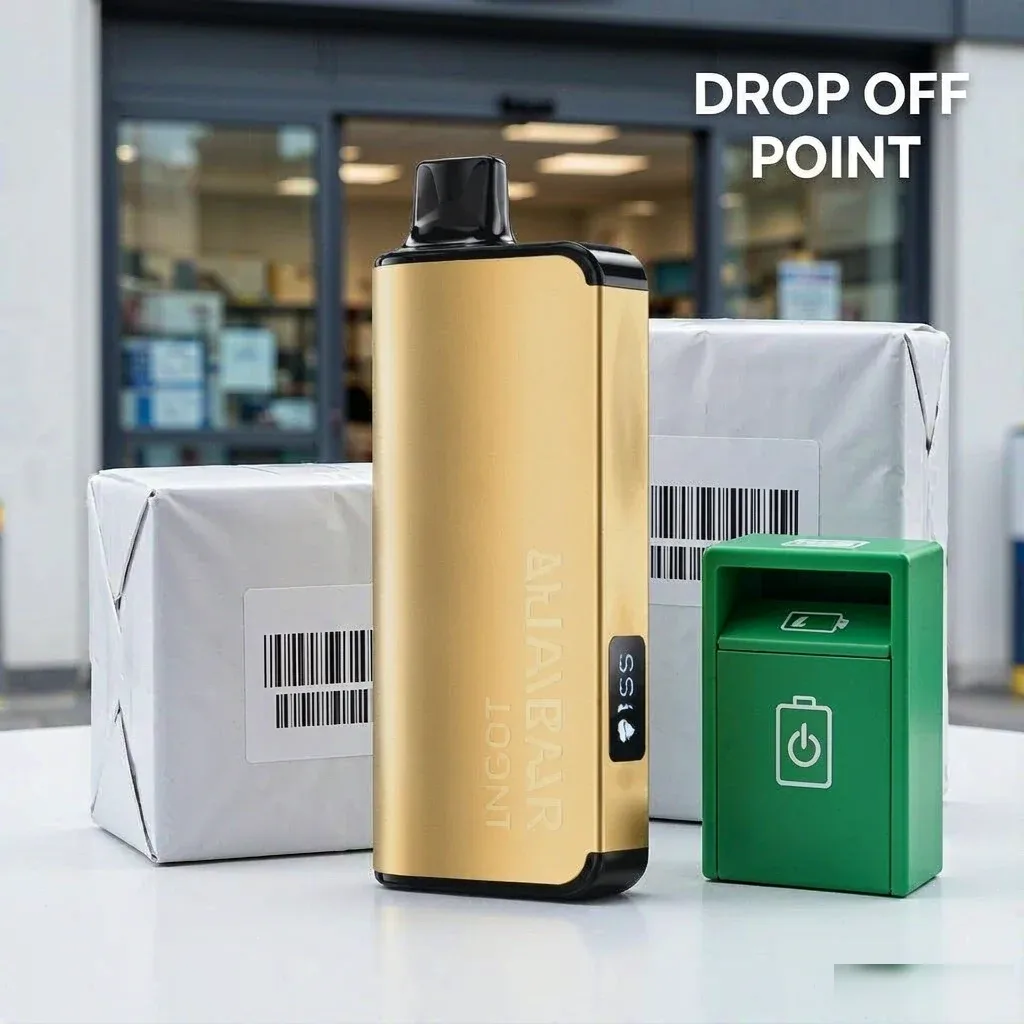
Australia has widened its battery disposal infrastructure considerably in recent years. The most useful entry point is the B-cycle scheme — the national battery recycling accreditation program — which maintains a public directory of accredited drop-off locations. In practice, the places most people can reach easily include:
- Council facilities — many local council customer service centres and waste depots run dedicated battery and e-waste collection, and an increasing number of council libraries now host small battery bins as well.
- Retail battery bins — major supermarket, hardware and stationery retailers commonly keep a battery collection bin near the entrance; these accept small loose batteries and, at many locations, whole small devices.
- Officeworks and electronics retailers — e-waste collection points at major electronics stores take small devices containing rechargeable cells.
- Community recycling centres — permanent drop-off sites in most metro areas accept e-waste separately from general recycling.
One habit worth building: check before you drive. Drop-off acceptance policies for whole vapes vary more than for plain batteries — some sites want the battery removed (which you should never attempt yourself with a sealed disposable), while others take the complete device. A two-minute call or the B-cycle location finder settles it. If a site cannot accept whole vapes, ask which one does; in most urban and suburban areas the nearest accepting point is well within a normal errand loop.
Step 4 — Know What Not to Do
The prohibitions are just as important as the routine. Never put a used vape in any household bin — general waste, recycling, or garden organics. Never attempt to open, puncture, crush or dismantle a disposable to separate the battery; the sealed housing is part of the safety design. Never burn a used device, and never leave one in a hot car or on a windowsill in direct sun. And never dispose of one in a way that passes the problem to someone else — dumped vapes in parks and waterways are both a litter problem and a fire risk for the waste crews who eventually collect them.
How Council and State E-Waste Rules Fit In
Australia does not have a single national rule that names vapes specifically; instead, used vapes sit under the broader e-waste and battery rules that most councils enforce locally. The practical pattern across the country is consistent: kerbside bins are for household organics, general waste and container recycling — and lithium devices are excluded from all three. Councils handle the rest through drop-off days, permanent depots, or partnerships with accredited collectors. Some states have gone further with dedicated e-waste landfill bans, which formalise what most operators already practise.
The direction of travel is clear, and it is worth noting for planning: infrastructure for battery disposal has been expanding every year, and expectations on households are moving from "optional" to "expected". Getting into the disposal habit now means you will not be scrambling when local rules tighten further. It also means your household waste stream stays clean, which genuinely matters for the people working at the sorting end.
Buying With Less Waste in Mind
Disposal is the end of the pipe, but a few purchase habits genuinely reduce the amount of end-of-life material you generate. The most effective one is matching puff count to actual usage — a device that dies with half its battery unused, or gets abandoned mid-life because the flavour tired out, wastes the whole manufacturing footprint behind it. The flavour fatigue guide covers why rotating flavours rather than stockpiling half-finished bars keeps more devices running to a full end of life.
The second habit is consolidating orders rather than accumulating devices one at a time. Multi-pack listings — like the INGOT 9000 10-pack or the INGOT 9000 20-pack — mean fewer shipping cycles per device, and the per-unit pricing makes it easier to plan consumption over weeks rather than buying reactively. It also concentrates your disposal routine: one planned drop-off trip with several finished bars beats five separate rush jobs. Note that multi-packs are about convenience and planning, not automatically cheaper per unit in every configuration — check the listed price against singles before assuming a discount. The disposable vs refillable cost breakdown walks through that arithmetic in detail.
One more thing worth saying plainly: disposables are the right format only for some vapers. If you find yourself generating a steady stream of finished bars and it bothers you, the honest answer is not to feel guilty about each one — it is to make sure every single one reaches a proper drop-off point. A used vape responsibly recycled recovers the majority of its battery materials; the same device in landfill recovers none of it.
How Ordering From Australian Stock Fits the Picture
There is a supply-chain angle to responsible use that most reviews skip, so it deserves a paragraph here. Every device sold on this site ships from Australian stock, sealed and batch-coded — which matters for disposal more than it might seem. Sealed packaging means the device you receive has not been sitting opened on a shelf losing battery health before it reaches you, and batch coding means the specific production run is traceable if a fault ever appears. A device that arrives in good condition and stores well is a device that will reach its full rated life cleanly, rather than being binned early over a fault that came from rough handling somewhere in the chain.
Fulfilment speed plays a role too. Business-day orders placed before about 2:30pm AEST are dispatched the same day, delivery runs roughly 3–7 days Australia-wide, shipping is a flat A$18 with free shipping over A$199, and a tracking reference is emailed after dispatch (the AU vape delivery guide covers the full timeline, and the shipping page and order tracking page handle the details). Why does that matter for waste? Because predictable delivery lets you order what you will actually use, on a schedule that matches your consumption — instead of panic-buying oversized stockpiles that sit unused until they age out. The FAQ page answers the common ordering questions if you are setting that rhythm up for the first time.
A Quick Recap Checklist
Condensing everything above into the routine you can actually follow:
- Stop at end of life — when flavour fades or the draw weakens, retire the device; do not open or recharge it.
- Store safely — cool, dry, upright, away from sunlight and flammables; a metal tin is ideal.
- Never use household bins — no general waste, no kerbside recycling, no garden organics.
- Find a drop-off point — check the B-cycle directory, your council facilities, and retail battery bins; confirm whole-vape acceptance before driving.
- Drop off in batches — consolidating finished devices into one trip saves time and makes the routine stick.
- Buy to your usage — match puff counts and pack sizes to real consumption so fewer devices end up half-used.
Frequently Asked Questions
Can I put a used disposable vape in the household bin?
No. Used vapes contain lithium batteries and are excluded from household waste and kerbside recycling across Australia. Compressed lithium cells are a leading cause of fires in garbage trucks and sorting facilities. Take them to a battery or e-waste drop-off point instead.
Where is the nearest vape drop-off point?
Start with the B-cycle accreditation directory for accredited battery collectors, then check your local council's waste page — many councils run battery collection at depots, customer service centres and libraries. Retail battery bins at major stores are another common option. Acceptance policies for whole vapes vary by site, so confirm before you go.
Can I remove the battery from a disposable vape myself?
No. Disposable vapes are sealed units and the battery is not designed to be removed by the user. Puncturing or opening the casing is dangerous and is exactly the kind of damage that causes battery failures. Hand over the complete device at a drop-off point that accepts whole units.
What should I do with a vape that is damaged or swollen?
Do not bin it and do not store it loosely. Keep it in a non-flammable container outdoors or on a hard surface away from anything combustible, and take it to a battery drop-off point as soon as practical — staff at facilities that accept damaged batteries can handle it safely. If the device came from a sealed, batch-coded order, the batch code on the packaging can help support trace the unit if you need to report a fault.
How many used vapes is too many to store at home?
There is no hard limit, but there is no reason to hoard them either. A metal tin holds a dozen finished bars without issue. Once the tin is full, that is your cue for a drop-off trip — which is exactly the batch habit this guide recommends.
Does buying bigger puff counts actually reduce waste?
It can, provided the device gets used to its full life. A bar rated for up to 9,000 or 12,000 puffs that is consumed entirely generates one device per full cycle, whereas repeatedly abandoning smaller bars mid-life generates more end-of-life units per puff consumed. The pacing guide helps you judge which capacity matches your usage, and the range hubs for the INGOT 9000, TEQ 12000, IGET One and IGET Bar Pro list the options side by side.
Who can legally buy these products in Australia?
Products on this site are intended for adults aged 21 and over only. Nicotine products are not for non-smokers or non-vapers, and age verification applies at delivery.
This article is intended for adult readers aged 21+ only. The products described are for existing adult smokers and vapers and are not recommended for non-smokers or non-vapers, and no therapeutic or health benefits are claimed for any product on this site. Nicotine is an addictive substance. Follow the age warnings and product warnings printed on the packaging, and dispose of used devices responsibly.