
Quick Answer: heat is the enemy, and an Australian summer delivers it in ways a sealed disposable was never designed for. Store your devices in a cool, dry, dark spot that stays under about 25°C — a bedroom drawer, a cupboard away from the kitchen, a hallway linen press — and keep them in the sealed packaging until you actually open one. Never leave a device in a car, on a windowsill, in a bathroom, or in a garage, and never store a part-used device loose in a bag with keys and coins. If you buy ahead for the season, buy sealed multi-packs from a single batch, store them flat and upright, and work through them first in, first out using the batch code on the box. Everything in this guide is about protecting the device you paid for: flavour, draw quality and the battery inside it. Strictly for adults 21+ who already vape or smoke; nothing here is a reason for a non-vaper to start.
Every summer the same messages arrive: a device that tasted fine last week now tastes muted or slightly burnt, a bar that fired weakly from the first draw, a pack that leaked in a glovebox. Almost none of these are manufacturing faults. They are storage outcomes. Disposable vapes are sealed units with a built-in battery, a coil, a wick and a reservoir of e-liquid, and all four of those components react to temperature. In a country where a parked car can sit far above 60°C on a 38°C day, and where a west-facing bedroom can hold the mid-thirties for hours after sunset, "just leave it in the car" is the single most expensive habit an adult vaper can have.
This guide is the practical version, written for how people actually live in Australia between December and February: share houses without air conditioning, cars with dark interiors, beach bags, camping trips, and the annual habit of buying three or four devices at once to avoid paying postage twice. It covers where to store devices at home, why the car is a write-off, how to buy ahead without wasting money, how to read the batch code, and what to do when a device arrives in the post after three days in a hot delivery van. If you want the broader buying context first, the Vape Australia guide covers the basics, and the battery capacity explainer goes deeper on what is actually inside the shell.
Why an Australian summer is hard on a sealed device
A disposable vape is not a sealed inert object, even though the packaging makes it feel like one. Inside the shell there is a lithium cell, a coil, a cotton or fibre wick, and e-liquid containing flavour compounds and nicotine. Each of those has a comfortable range and a point where behaviour changes.
Heat is cumulative, not instant
A single hot afternoon rarely kills a device outright. What damages it is repeated exposure: the liquid thins, the wick saturates unevenly, and the coil begins to cook residue that would otherwise stay suspended. Come back to it a fortnight later and the flavour has a flat, slightly ashy back end that no amount of shaking fixes. The battery is affected too, though not in a dramatic way — a cell that has spent weeks in a hot room simply holds less useful charge, which shows up as a device that seems to run out earlier than the puff rating suggests. If you have ever wondered why one bar of the same flavour outlasted another, storage history is usually the answer.
Humidity and condensation do the quiet damage
Australia's summer is not only hot, it is humid — intensely so along the east coast and in the tropics. A bathroom, a laundry, a covered outdoor area, or a beach bag with a damp towel all expose a device to warm moist air. Condensation forms inside the air path, the draw becomes gurgly, and in the worst cases liquid migrates into the airway and leaks out of the mouthpiece. This is why "keep it in the bathroom so it is out of the way" is one of the most common and most damaging storage choices people make.
Light degrades the liquid
Ultraviolet light is not kind to flavour compounds. A device that lives on a dashboard or a windowsill for a month will taste flatter than the identical device kept in a drawer. The packaging exists partly to block light, which is a good reason not to tear a device out of its box the day it arrives and leave it lying around.
The four storage mistakes that cost the most
1. The car — any car, any time
This is not a close call. On a 35°C day, the cabin of a parked car routinely passes 60°C within twenty minutes, and a dark dashboard or a console bin can run hotter still. That is well beyond anything a disposable is built to tolerate. The liquid thins and wicks too fast, the coil is starved on the next draw, and the battery is stressed in a way it will not recover from. A device left in a glovebox for a week in January is not the same device afterwards, even if it still works. If you keep a spare in the car out of habit, move it to a bag you take with you, and accept that the car is a transport container for minutes, not a storage location.
2. The bathroom, the laundry, or the kitchen bench
All three combine warmth with moisture, and the kitchen bench adds direct sun for part of the day in most Australian rentals. A bedroom drawer two metres away is a materially better location.
3. Loose in a bag or pocket
A part-used device rolling around with keys, coins and a phone is being asked to survive impact, lint, and pressure on the mouthpiece. Lint in the airway produces the gurgle people blame on the device; pressure on a soft mouthpiece can crack it. A small hard case, or simply the original box, solves this for a few dollars.
4. The fridge or freezer — a persistent myth
Cold storage sounds scientific and is a bad idea here. A fridge is humid, condensation forms the moment you bring the device back to room temperature, and repeated cycles push moisture into the airway. Freezing a lithium cell is worse. Room temperature, dry, dark: that is the entire specification.
Where to keep devices at home
The test is simple. Put your hand on the spot at 4pm on a hot day. If the surface is warm to the touch, or if the spot gets direct sun at any point, it fails. Airflow matters more than people expect — a closed cupboard in an unairconditioned room still gets hot, while a hallway with a ceiling fan stays much closer to ambient.
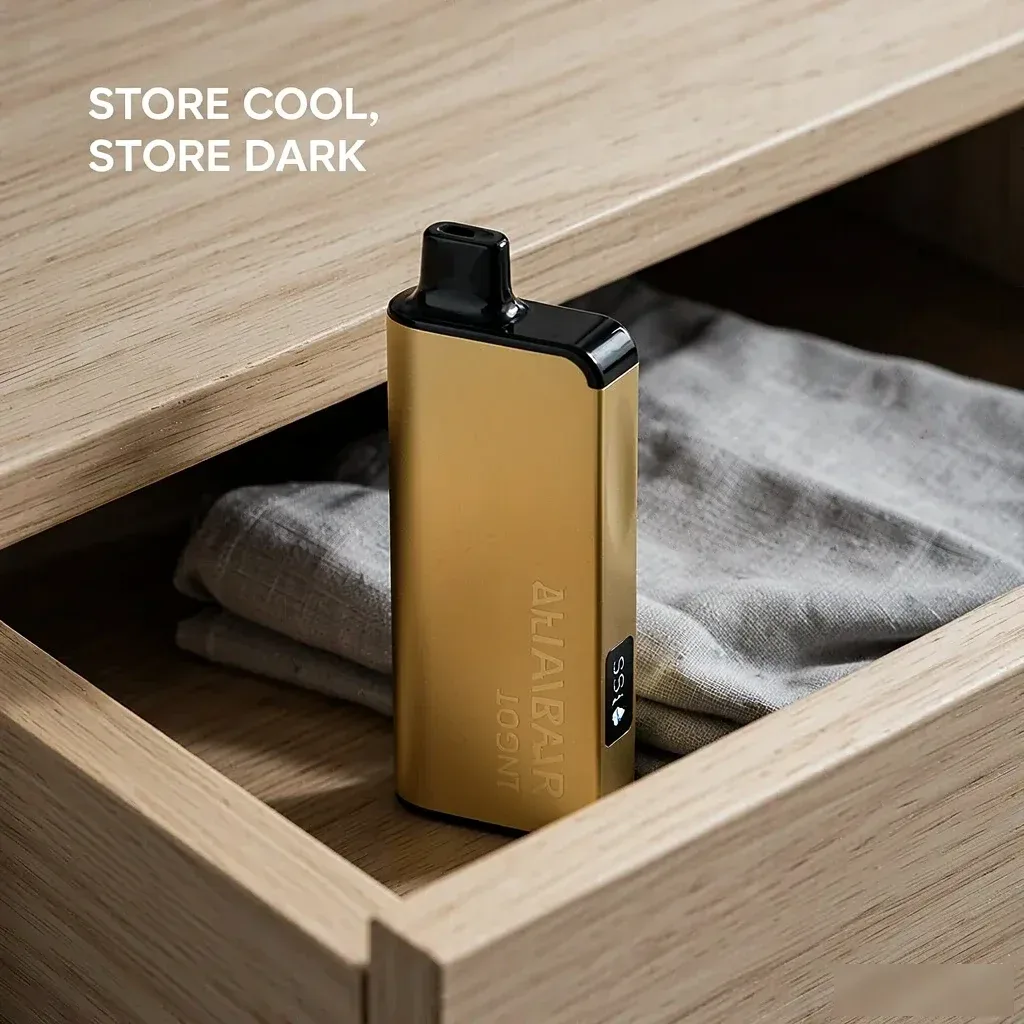
- Bedroom drawer, away from the window — best. Stable temperature, dark, low humidity.
- Hallway or linen cupboard — good. Shaded, ventilated, rarely above ambient.
- Living room shelf out of direct sun — fine for devices in use. Acceptable if there is no direct light and no heater nearby.
- Kitchen bench — poor. Morning sun, cooking heat and steam.
- Bathroom vanity — poor. Shower humidity and condensation.
- Garage or shed — bad. Uninsulated, and often the hottest space on the property.
- Car glovebox or console — worst. Regularly exceeds 60°C in summer.
- Fridge or freezer — worst. Condensation and thermal cycling.
If you live in a top-floor apartment or a west-facing house, add one more rule: keep devices off exterior walls. In a brick or rendered wall that has absorbed sun all afternoon, the inside face stays warm well into the evening, and a bedside table against that wall is warmer than the middle of the room.
Storing a part-used device between sessions
Most people own one device at a time and use it across a couple of weeks, so the practical question is what to do overnight and between uses. Three habits cover it. Keep the mouthpiece covered — the silicone plug many devices ship with is worth keeping, and a small zip bag works if the plug is lost. Stand the device upright rather than lying it on its side, so any liquid sits at the base rather than against the airway. And keep it out of direct sun during the day, which usually means a drawer rather than a desk.
If you rotate several flavours, do not leave four open devices scattered around the house. An open device is an exposed wick, and an exposed wick in a hot, dry room is where muted flavour comes from. Rotate two at most, keep the rest sealed, and finish a device before opening its replacement. Our guide to IGET flavour families is useful here, because it is easier to keep a small rotation when the flavours are deliberately different rather than three variations of the same fruit.
Buying ahead: how many devices is sensible for summer
Summer is when people stock up, partly because postage is a fixed cost and partly because nobody wants to run out over the Christmas break. The economics on the ALIBARBAR INGOT 9000 range make the trade-off concrete. A single device is A$49.90. The multi-packs price as follows, all drawn from the live listings:
- 3 Pcs pack — A$168.00, which works out at A$56.00 per device. Best for testing three flavours before committing.
- 5 Pcs pack — A$245.00, or A$49.00 per device. The sweet spot for a household of two across one season.
- 10 Pcs pack — A$490.00, or A$49.00 per device. Sensible for heavier users or two people ordering together.
- 20 Pcs pack — A$989.00, or A$49.45 per device. Built for group buys and long summer holidays.
Two things follow. First, the 5-pack is the point where the per-device price stops moving much, which means there is no financial reason to buy twenty if you only need five. Second, any multi-pack clears the A$199 free-shipping threshold on its own, so the flat A$18.00 postage disappears at the 5-pack level and above. That is the real reason bulk buying makes sense here — not a dramatic discount, but the removal of a fixed fee plus a single delivery instead of four.
The counter-argument is storage risk. Twenty devices sitting in a hot spare room for six months is twenty devices degrading together. If you buy a 20-pack, split it: keep three or four in the bedroom drawer and store the rest sealed, flat, in the coolest cupboard in the house, ideally in the original carton so the batch code stays with the units. The 20 Pcs listing ships as mixed sealed devices in best-selling flavours, factory-fresh and batch-coded, which is exactly what you want for a buy-ahead order: individual sealed units, not a bulk bag.
Rotation, batch codes and the first-in-first-out rule
Every sealed unit on this site ships with a batch code, and that code is the only reliable way to know which device is older. The rule is the same one supermarkets use: whatever is already open gets finished, and whatever is oldest in the drawer gets opened next. Write the arrival month on the carton with a marker if the code is hard to read — thirty seconds of effort that stops you from discovering a two-year-old device at the back of a cupboard in November.
Batch codes matter for a second reason. If a device misbehaves — leaks in the box, fires weakly from new, tastes of nothing at all — the batch code is what support needs to trace it. Photograph the code on the box before you throw the packaging away, especially on a multi-pack where the outer carton carries the code for the whole order. Our article on why IGET packaging designs differ explains why box artwork varies between batches, which is useful context if a delivery looks different from the last one.
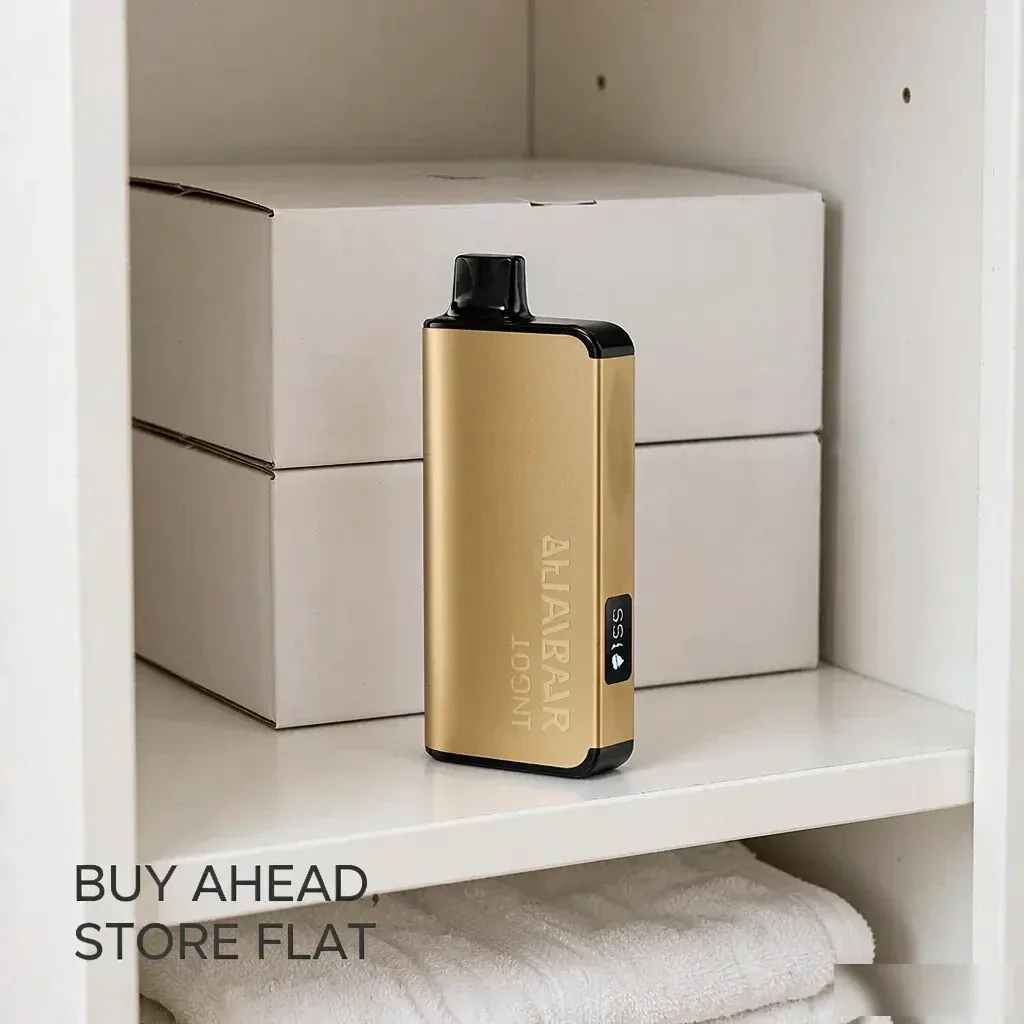
Store devices flat rather than on their end if they are sealed in a carton, and upright once opened. Do not stack heavy objects on a carton of disposables; pressure on the mouthpieces of twenty devices is avoidable. And keep the carton off concrete floors in a garage or under a house — concrete stays cool but transfers moisture, and cardboard wicks it.
Summer deliveries: what three days in a van does
Orders here ship Australia-wide for a flat A$18.00, free over A$199, with business-day orders placed before about 2:30pm AEST leaving the same day, and delivery typically inside 3–7 days. In summer that means your parcel spends real time in unairconditioned vans, sorting centres and letterbox heat. Packaging is plain and sealed, which helps, but no mailer is a cool room.
So inspect on arrival rather than assuming. Open the parcel indoors, check that each device is still in its sealed wrapper, confirm the batch code is present, and let the devices sit at room temperature for an hour or two before first use if the parcel itself feels warm. Do not put a warm delivery straight into the fridge to cool it faster; that is how condensation gets in. If a device has leaked inside its wrapper, or the wrapper is torn, photograph it and contact support with the order reference and batch code before using it.
Ordering early in the week is a small optimisation worth knowing: a Friday afternoon order can sit in a depot over a hot weekend, while a Monday morning order moves through the network during the working week. Full terms are on the shipping page, and the help section covers tracking and returns.
Travel, holidays and the beach
A beach bag is a humid, sunny, sand-filled environment, which is three of the four things to avoid at once. If a device goes to the beach, it goes in a zip bag inside a shaded bag, not in the mesh pocket facing the sun. Do not leave it on a towel for three hours. Sand in a mouthpiece is not recoverable in any pleasant way.
For longer trips, carry sealed devices rather than open ones, keep them in cabin baggage rather than checked luggage where possible — hold luggage is unheated and unpressurised in the hold, and while that is not dangerous for a sealed disposable, it is not kind to it either — and never leave a device in a parked car at a service station or a lookout. That last one catches more people than any other summer mistake, because the stop is only meant to be ten minutes.
If you are renting a holiday house without air conditioning, treat the hottest room as off-limits. A north or west-facing bedroom in a coastal rental can hold heat past midnight, and a device left on the bedside table there for a fortnight will taste noticeably flatter than one kept in a hallway cupboard.
How to tell a device has been stored badly
The symptoms are consistent and worth learning, because they tell you whether to blame the device or the drawer. A gurgling draw or liquid in the mouthpiece points to condensation or heat-driven thinning. A taste that goes flat and slightly ashy from the first puff suggests the coil has been cooked or the wick has degraded. Visible discolouration of the e-liquid, or leaking inside a sealed wrapper, is a storage or transit failure and a legitimate support case. A device that dies well before its rated puff count — our puff pacing guide explains what a realistic count looks like — has often had a hot month somewhere in its life.
What you cannot fix is heat damage. Once flavour compounds have degraded, no amount of cooling, shaking or resting brings them back. This is why prevention is the whole game, and why the two-dollar solution — a drawer instead of a glovebox — is worth more than any accessory.
A five-minute summer storage routine
- Move every device out of the car, the bathroom, the garage and any spot that gets direct sun.
- Choose one drawer or cupboard that stays shaded and below roughly 25°C, and make it the only storage point.
- Keep sealed units sealed, in their cartons, batch code visible and photographed.
- Keep no more than two devices open at a time; finish one before opening the next.
- Stand open devices upright with the mouthpiece covered.
- Store multi-packs flat, off concrete, with nothing heavy on top.
- Check the drawer in a January heatwave; if the inside feels warm, move everything to a cooler room.
None of this is complicated, and none of it requires buying anything. It is simply a matter of treating a disposable vape as what it is: a small sealed battery device with liquid inside, which prefers the same conditions you do. The range pages are a good place to plan a summer order — the INGOT 9000 category, the ALIBARBAR TEQ category, the IGET One category and the IGET Bar Pro category all list current stock and pricing, and if you are weighing formats, the Bar Pro versus One comparison covers the difference in size and draw.
Frequently asked questions
Can I keep disposable vapes in the fridge in summer?
No. A fridge is a humid environment, and condensation forms as soon as you take the device out. Repeated cooling and warming cycles push moisture into the airway, which is how gurgling and leaking start. Room temperature, dry and dark is the correct answer, even in a heatwave.
How hot is too hot for a disposable vape?
As a working rule, treat anything above about 30°C as a problem and anything above 40°C as likely damage. A parked car passes both within minutes on a summer day, while a shaded indoor drawer typically stays within a few degrees of the room. You do not need a thermometer — if the spot feels warm to your hand at 4pm, it is too warm.
How long can I store sealed devices before using them?
Sealed units stored cool, dry and dark are best used within a few months of arrival, and a summer buy-ahead order should comfortably cover a season. The limiting factor is not a printed date on the box but the conditions in your cupboard: the same device kept in a hot garage for six months will not perform like one kept in a hallway cupboard.
Does storing a vape in the heat make it leak?
Heat thins the liquid, and thinned liquid wicks faster than the coil expects, so it can flood the airway and appear as leaking or gurgling. Physical pressure and impact contribute too. A device that leaks inside its sealed wrapper on arrival is a transit or storage failure and worth reporting with the batch code.
Should I take the device out of its packaging when it arrives?
Only if you are using it now. The wrapper blocks light, keeps dust and lint out of the mouthpiece, and carries the batch information. Sealed units stay sealed until their turn in the rotation.
Is it safe to leave a vape in a hot car for an hour?
An hour is enough to do damage on a hot day, even if the device still works afterwards. The flavour will be the first thing to suffer and the battery the second. There is no version of car storage that is worth the risk when a bag or a pocket costs nothing.
Do multi-packs store differently from single devices?
They store the same way, with two extra rules: keep them flat rather than stacked upright if they are boxed, and keep the outer carton because it carries the batch code for the whole order. Split a large pack so that only the devices you will open in the next month sit outside the carton.
What should I do if a device tastes flat straight out of the box?
Check the seal and the batch code first, then contact support with your order reference, the flavour and photos. If the wrapper was intact and the device was stored correctly, that is a legitimate quality question rather than something to work around by shaking it.
Products on this site are intended for adults aged 21 and over only. These products are not for non-smokers or non-vapers, and no therapeutic or health claims are made or implied. Nicotine is addictive. Follow the age warnings and product notices on the packaging, store devices away from children and pets, and dispose of used devices responsibly through an e-waste or battery recycling point rather than household waste.